Campbell Barracks, Mark Twain Village, Patrick Henry Village and Patton Barracks
Several huge projects are underway in Heidelberg, Germany, including affordable housing and a technology campus.

Campbell Barracks and Mark Twain Village are being remodeled into affordable housing and an urban park
Size: 35 acres
Base in operation: 1945–2013
Construction: 2016–2027
Ownership: Government
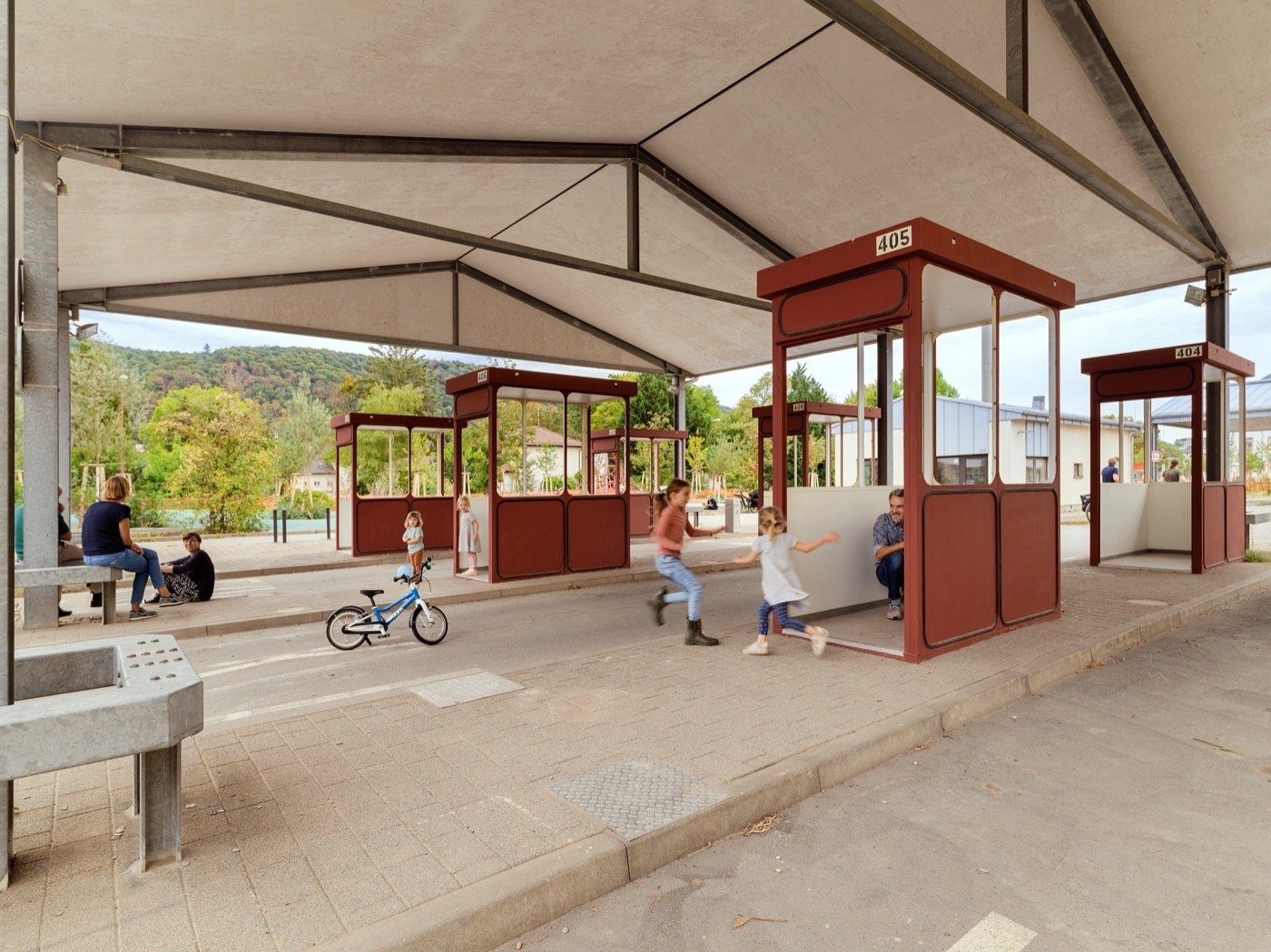
A former barracks and housing annex now provide affordable homes for thousands. Composed of 850 housing units under American use, innovative construction promises 1,500 homes, 70% of which are affordable housing. The mixed-use, sustainable district will also include student residence halls, shops, childcare facilities, a grocery store, shopping center, vocational school, senior citizens center, police station, offices, restaurants, and a public park. “The Park of Encounters,” which opened in 2022, includes relics from the past, including the former parade grounds, guard shacks, checkpoints and other military remnants. Part of the barracks is under heritage protection. As of 2016, the first new residents moved into the renovated dwellings in Mark Twain Village.
The master plan for the area targets a high level of urban planning, striving to balance “social, ecological and economical requirements, while striving to create a residential area where people enjoy living.” Details like rain gardens, recycled materials, and commercial opportunities on the ground floor of apartments have transformed the area.
Decades of army use left a palimpsest of traces that were waiting to be reinterpreted.
Landezine, 2023
Patrick Henry Village becomes a high-tech, carbon-neutral commune
Size: 247 acres
Base in operation: 1947–2013
Construction started: 2016–2027 (est.)
Ownership: Government, German Federal Institute Real Estate Agency
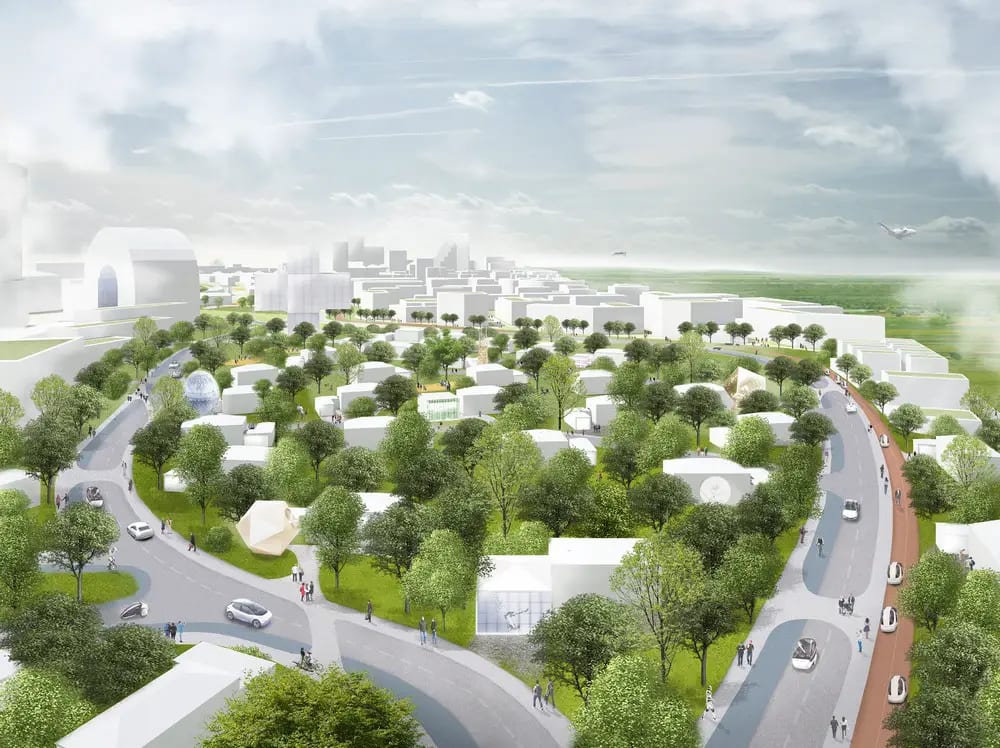
Patrick Henry Village, a former housing annex in the south part of Heidelberg, will become a sustainable, high-tech commune where thousands of people will live and work. The site contained around 1,500 housing units, schools, a supermarket, sports facilities and a cinema. Unlike other projects, the developers want to “retain the basic characteristics of the urban structure given to PHV by the Americans” while clustering buildings much closer together and repurposing many structures for co-living and -working purposes. Each home (or “mansion,” as the developers refer to them) comes with a garage, and these will be turned into studios and laboratories for all to use. Additionally, plans to incorporate wifi hubs, smart streetlights, and other technological advancements will position the development as cutting edge.
Before construction on the commune began, Patrick Henry Village was home to thousands of refugees at the height of the European migrant crisis.
Patton Barracks transforms into Heidelberg Innovation Park
Size: 35 acres
Base in operation: 1945–2013
Construction: 2017–ongoing
Ownership: Public, Technologiepark Heidelberg GmbH, a subsidiary of the City of Heidelberg
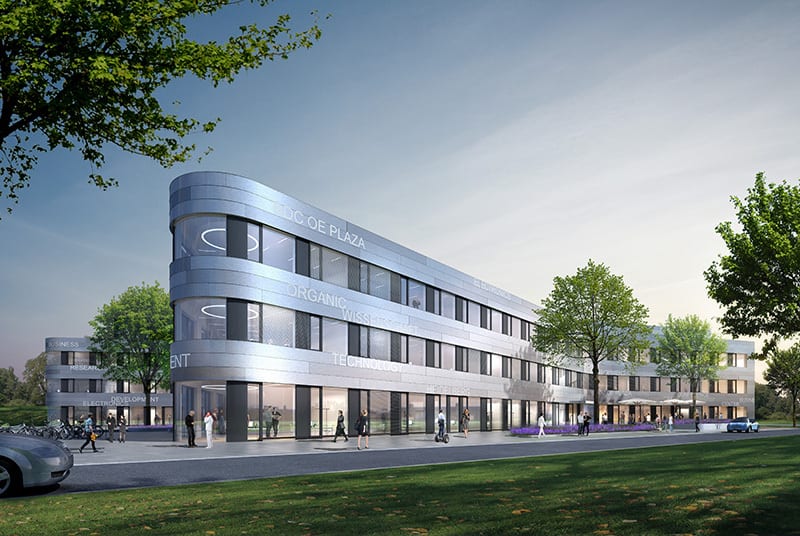
On the grounds of Patton Barracks sits the Heidelberg Innovation Park: a technology campus embracing cutting-edge technology and life sciences. The park boasts fiber optic capabilities in all buildings, coworking spaces, offices, laboratories, childcare centers, restaurants, and a 5,000 seat sports arena. Developers engineered open spaces and places of convergence to encourage creativity and innovation through parks, plazas, and interspersion of startups and established businesses. Select buildings will be preserved, such as the old stables and chapel.
We are in the perfect location to connect the Googles of the west with the Alibabas of the east.
Eckart Würzner, Mayor of Heidelberg
These sites in Heidelberg are just a few examples of what happens to thousands of former U.S. military bases around the world. What about the rest?
NEXT CASE STUDY
GO BACK